Filter
Undergraduate Subjects
| Course | Type | Instructor | Days | Time | Location |
|---|---|---|---|---|---|
| Lecture | Daniel Irizarry | W | 7pm-10pm | W97-160 | |
| Lab | Daniel Irizarry | F | 2pm-5pm | W97-160 | |
3-3-6 units. HASS-A Students join Theater Arts faculty and staff in the development of a fully-staged production for an audience in MIT’s laboratory for the performing arts at W97. Students collaborate as performers, designers, writers, choreographers and technicians. Weekly rehearsals, design labs, and workshops introduce students to an array of rehearsal and performance techniques over the course of the term. In addition to weekly meetings, required out-of-class rehearsals and participating in the culminating public performances are integral components. Open to students at all levels of experience. Each term involves a different project which may include community-driven interventions, classical or contemporary plays, devised works, screenplays, musicals or other live performance events. Students taking graduate version complete additional assignments. Enrollment limited. |
|||||
| Lecture 1 | Blythe de Oliveira Foster | MW | 3pm-5pm | 50-201 | |
| Lecture 2 | Jorge Rubio | TR | 9am-11am | W97-160 | |
| Lecture 3 | Jorge Rubio | TR | 11am-1pm | W97-160 | |
| Lecture 4 | Daniel Irizarry | TR | 1pm-3pm | W97-160 | |
| Lecture 4 | Daniel Irizarry | TR | 3pm-5pm | W97-160 | |
4-0-8 units, HASS-A Explores the actor’s dramatic instincts with body, voice, imagination, language, and action. Studio exercises foster creative curiosity, improvisation, collaboration, and a sense of kinesthetic and spatial awareness. Develops communication skills and offers varied approaches to relating with self, ensemble, character, dramatic material, and audience. Limited to 20 per section. |
|||||
| Lecture 1 | Keely Eastley | TR | 11am-1pm | 50-201 | |
| Lecture 2 | Keely Eastley | TR | 1pm-3pm | 50-201 | |
| Lecture 3 | Keely Eastley | TR | 3pm-5pm | 50-201 | |
4-0-8 units, HASS-A Thorough exploration of the voice in the context of human communication, provides a progression of exercises designed to free, develop, and strengthen the voice — first as a human instrument and then as the actor’s instrument. Explores a progression of voice work that begins with physical awareness and breathing, moving into breath awareness, discovery of the body as the source and amplifier of sound vibration, opens the vocal channel, and develops strength and range in creative expression. Uses historical speeches and heightened language text to expand use and freeing of voice and self. Subject may culminate in a public presentation. Final grade highly dependent on attendance. Students taking graduate version will complete additional assignments. Limited to 20; preference to Theater majors, minors, and concentrators who have pre-registered. |
|||||
| Lecture | Blythe de Oliveira Foster | W | 7pm-10pm | W97-162 | |
3-0-9 units, HASS-A Experiments with the equation of a theatrical event, remixing compositional principles of time, space, and action through the Viewpoints technique. Explores how different combinations of tempo, duration, gesture, shape, repetition, spatial relationship, architecture, and floor pattern can change what an audience experiences. Students will watch live and recorded performances, read short essays, train physically in Viewpoints, and participate in discussions. This workshop introduces students to a wide range of contemporary performance-makers and offers opportunities to create original theater pieces in a supportive environment. Enrollment is limited to 20. |
|||||
| Lecture 1 | Stephanie Turner | MW | 11am-1pm | W97-160 | |
| Lecture 2 | Dan Safer | TR | 1pm-3pm | W97-162 | |
| Lecture 3 | Sarah Konner | TR | 3pm-5pm | W97-162 | |
4-0-8 units, HASS-A Explores the realities of the body in space and motion – interacting with gravity, momentum, inertia, alignment, negative space, one’s imagination, one’s body, other bodies, the present room and rooms from memory, geometry, stillness, and more. By releasing tension and abandoning the notion of pre-planning, students experience a natural, spontaneous flow of movement, opening themselves up to, and diving into, whatever might happen. Develops alertness in order to work in an energetic state of physical disorientation, self-correcting what doesn’t work and reinforcing what does on the spot, discovering physical/emotional truths and shared moments that leave students aware, centered, incredibly present, and sharply alive. Students taking graduate version will complete additional assignments. Limited to 20 per section. |
|||||
| Lecture | Amy Rubin | F | 2pm-5pm | W97-261 | |
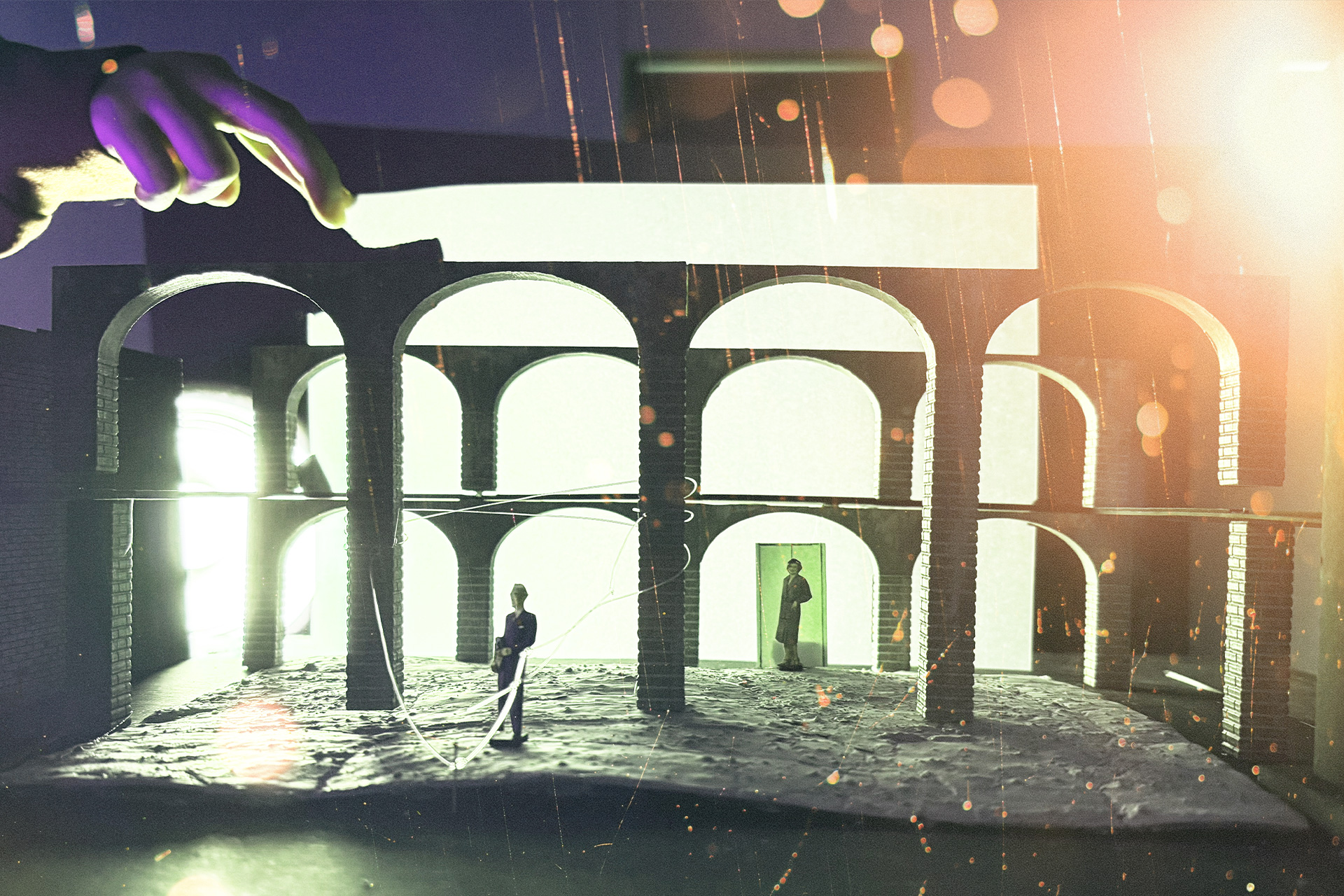
3-0-9 units. HASS-A Introduces the fundamental skills and concepts of scenography through a series of individual design projects structured to explore the relationship of the performer to the environment, the interrelation of lighting and stage design, and the evolution of visual narrative. Develops a basic visual literacy for the theater by honing skills in drawing, model building, 3-D modeling, digital image manipulation, and color theory. Projects are complemented by study of artworks and theories of contemporary artists and theater makers. Lab fee is required. |
|||||
| Lecture 1 | Anna Kiraly | T | 2pm-5pm | W97-261 | |
| Lecture 2 | Sharon A. Lacey | T | 7pm-10pm | W97-261 | |
| Lecture 3 | Chelsea Kerl | W | 2pm-5pm | W97-261 | |
| Lecture 4 | Sharon A. Lacey | R | 2pm-5pm | W97-261 | |
3-0-9 units, HASS-A Explores drawing as a fundamental component of the design process. In-class drawing exercises focus on developing the hand-to-eye relationship and pre-visualization skills essential to any designer. Studies the use drawing as a route to understanding space and form and achieving accuracy through expression. By drawing figures, landscapes and/or still life compositions in a variety of media, students investigate the figure/ground relationship while dealing with tone, line, and composition, which are all requisite elements of design. Provides exposure to designers who have used drawing as a central component of their work. Students create a portfolio that includes in-class drawings, studies done outside of class, and one research-based written project. Lab fee required. Limited to 20. |
|||||
| Lecture | Grisha Coleman | W | 9am-12pm | 50-201 | |
4-0-8 units. HASS-A Integrates media and communication technologies in performing arts. Studio exercises provide a forum for experimentation. Contemporary and historical techniques for media integration examined through readings, viewing videos and short written essays. Technologies examined include digital imaging, composite and live feed digital video, and web-based performance. Engages the designer, director, choreographer, performer, visual artist or programmer in the practice of integrating media into live art events. Equipment is provided. Students taking graduate version complete additional assignments. |
|||||
| Lecture | Maria DeSimone | R | 2pm-5pm | W97-267 | |
3-0-9 units. HASS-A; CI-H Focuses on reading a play’s script critically and theatrically, with a view to mounting a coherent production. Through careful, intensive analysis of a variety of plays from different periods and aesthetics, a pattern emerges for discerning what options exist for interpreting a script from the distinct perspectives of the playwright, the actor, the designer, and the director. Students discuss the consequences of those options for production. Enrollment limited. |
|||||
| Lecture | Janessa Clark | M | 7pm-10pm | W97-162 | |
| Lab | Janessa Clark | W | 2pm-5pm | W97-162 | |
3-3-6 units. HASS-A Students collaborate with Theater Arts faculty to create DRIFT/dance, a dance-based soundwalk performance. This piece bursts out of the confined space of the theater to make MIT’s grounds the stage. The audience is guided through paths and architecture of the campus while a sonic landscape is created in real time. Through rehearsals, independent research work, students enrolled in the course become performers, choreographers, technicians, guides, and collaborators in all areas of the performance. All levels of dance experience are encouraged to participate. The course will collaborate with 21T.423 Topics in Theater Arts: Audio Storytelling for the 21st Century. Questions? Please email Janessa Clark: janessac@mit.edu, Dan Safer: safer@mit.edu, Christian Frederickson: cef045@mit.edu, and Sara Brown: saralb@mit.edu. |
|||||
| Lecture | Blythe de Oliveira Foster | F | 2pm-5pm | 50-201 | |
3-0-9 units. HASS-A Students study a range of solo performances, explore their own artistic voices, and hone their individual acting skills. Selected viewings and studio exercises support students with diverse strategies for composing and staging solo work. Culminates with students creating their own original solo performance pieces. Students taking graduate version complete additional assignments. Enrollment limited to 20. |
|||||
| Lecture | Jorge Rubio | MW | 1pm-3pm | 50-201 | |
Students apply performance skills to embodying characters in scripted scenes. Studio work further develops dramatic instincts and creative expression of the actor’s body, imagination, and voice. Introduces the challenges of synthesizing self, character, events, physical actions, and offers approaches to interpreting scripted material. Weekly rehearsals with a scene partner. Students taking graduate version complete additional assignments. Enrollment limited to 20. |
|||||
| Lecture | Janessa Clark | MW | 11am-1pm | W97-162 | |
4-0-8 units. HASS-A Laboratory-style class explores and invents techniques used to create dances. Students practice techniques focused on how and where to begin making a dance — sampling some of the endless ways to start a process, such as from the body, an idea, text, or a song — and then how to build up from there. Students make dances that are more than just a collection of moves, but events that do something, say something, or ask something. Builds a clear understanding of how a dance has an arc, a clear beginning, middle, and end, so that by doing it or watching it, both participants and audience end up somewhere new. Develops an understating of, and facility with, a wide variety of topics used to explore, start, and generate movement, dance, and performative events involving bodies moving through space. Students taking graduate version complete additional assignments. Enrollment limited. |
|||||
| Lecture | Janessa Clark | M | 2pm-5pm | W97-162 | |
4-0-8 units. HASS-A Researches screendance aesthetics, explores the history of the genre, and experiments with forming unique cinematic voices. The screendance form is a hybrid of the various techniques of film/video and the practice of choreography. Students are encouraged to use items that are available to them including, but not limited to, smartphones or a DSLR camera, and free or non-free editing software. No dance experience is required though students move and become the subjects in classmates’ films. Participants make multiple studies and one-minute films culminating in longer final projects to be presented in a classroom-based dance film festival at the end of the term. Limited to 20. |
|||||
| Lecture | Joshua Higgason | M | 7pm-10pm | W97-160 | |
4-0-8 units. HASS-A Explores the history, concepts, and techniques of sculpting space with light within a contemporary context. Students experiment with a wide range of approaches, tools, and skills to develop their own creative vision. Focuses on discrete forms that include live performance, installation, architecture, and developments in applied technologies. Studio projects alternate between conceptual studies and realized designs reflective of students’ own unique interests and talents. Students taking graduate version complete additional assignments. Enrollment limited. |
|||||
| Lecture | Dan Safer | T | 7pm-10pm | W97-162 | |
3-0-9 units. HASS-A Interdisciplinary dance theater studio invites students to investigate the spaces between dance and theater. Students engage in an array of acting and dance techniques to generate text from movement and movement from text. In-studio exercises examine the process of melding the expressive languages of words with languages of the body. Students use existing texts and compose original texts in the development of solo, duet, and ensemble projects. Explores the process of seeing and providing peer feedback to further expand the process of revision. Readings, short writings, video viewings, and guest lectures provide multiple avenues of understanding and illumine differing ways of making. Culminates with an opportunity for students to refine, develop, and share their projects in performance. Students taking graduate version complete additional assignments. Enrollment limited. |
|||||
| Lecture | Christian Frederickson | M | 2pm-5pm | W97-261 | |
3-0-9 units. HASS-A Students write and produce a pilot episode of a narrative podcast (about fifteen minutes in length); sources come from interviews or research that students conduct. At the start of the term, students pitch possible stories. Discussions of selected episodes of narrative podcasts such as Serial, Homecoming, and This American Life. Introduces the basics of podcast recording with a primer on using Logic Pro X and hardware like the Apogee Duet. Students record and edit a rough draft of their podcast using provided portable recording studio kits. Podcasts shared with the larger MIT community at the Podcast Listening Room at the end of term. Students taking graduate version complete alternate assignments. Enrollment limited. |
|||||
| Lecture | Ken Urban | W | 7pm-10pm | 4-146 | |
3-0-9 units. HASS-A Builds understanding of the methods playwrights use to transform an idea – drawn from their own lives, news and current events, even the plays of other writers – into a reality. Students use a variety of inspiration to write their own new scenes and short plays. Examines how research can help develop an idea for a new play and discusses ways to adapt a classic text for the contemporary stage. Writers also conduct personal interviews and use the transcript as source material for a new scene. Enrollment limited. |
|||||
| Lecture | Jay Scheib | M | 7pm-10pm | W97-165 | |
3-0-9 units. HASS-A Interdisciplinary studio introduces the theoretical basis, technical idiosyncrasies, and artistic practices of Live Cinema Performance. Media-rich studio exercises, guest artists, lectures, and prototyping sessions culminate in a live cinema performance collaboration presented in the final week of class for an invited audience. Engaging on both sides of the camera, each student evolves their own uniquely personal approaches to performance across media. Students taking graduate version (21T.531) complete additional assignments. Enrollment is limited. |
|||||
| Lecture | Claire Conceison | W | 7pm-10pm | 4-253 | |
3-0-9 units. HASS-A Seminar explores connections between athletics and theatre, performance studies, sociology, anthropology, and history. Focuses on performance of nation, race, and gender in sport, and how sport performs in society. Specific topics selected based on the research focus of each student. Enrollment limited. |
|||||
| Lecture | Ken Urban | R | 1pm-4pm | 1-136 | |
3-0-9 units. HASS-A Students write and extensively revise a full-length play, from an initial idea to a revised draft. For our purposes, any script longer than thirty minutes and under a hundred minutes is considered a full-length play. Students respond to each other’s work using a method inspired by dancer Liz Lerman, giving non-prescriptive advice and feedback to their fellow writers. Students taking graduate version complete additional assignments. Limited to 10. |
|||||
| Lecture | Christian Frederickson | M | 7pm-10pm | W97-261 | |
Audio Storytelling for the 21st Century surveys the massive changes of the past 25 years in the way audio is used for storytelling and gives students the tools to tell their own stories. Topics will center around 4 modules: an audio play, audio for film, binaural audio, and a collaboration project with another Theater Arts class. Students will record and produce an audio play with music and sound effects, audio for a short film including dialogue replacement and foley sound effects, a binaural sonic experience for headphones, and a collaborative project with students from another Theater Arts class. In Spring 2027, a collaboration is planned with 21T.200: DRIFT/dance.
|
|||||
Graduate Subjects
| Course | Type | Instructor | Days | Time | Location |
|---|---|---|---|---|---|
| Lecture | Daniel Irizarry | W | 7pm-10pm | W97-160 | |
| Lab | Daniel Irizarry | F | 2pm-5pm | W97-160 | |
3-3-6 units. HASS-A Students join Theater Arts faculty and staff in the development of a fully-staged production for an audience in MIT’s laboratory for the performing arts at W97. Students collaborate as performers, designers, writers, choreographers and technicians. Weekly rehearsals, design labs, and workshops introduce students to an array of rehearsal and performance techniques over the course of the term. In addition to weekly meetings, required out-of-class rehearsals and participating in the culminating public performances are integral components. Open to students at all levels of experience. Each term involves a different project which may include community-driven interventions, classical or contemporary plays, devised works, screenplays, musicals or other live performance events. Students taking graduate version complete additional assignments. Enrollment limited. |
|||||
| Lecture 1 | Blythe de Oliveira Foster | TR | 11am-1pm | 50-201 | |
| Lecture 2 | Keely Eastley | TR | 1pm-3pm | 50-201 | |
| Lecture 3 | Keely Eastley | TR | 3pm-5pm | 50-201 | |
4-0-8 units, HASS-A Thorough exploration of the voice in the context of human communication, provides a progression of exercises designed to free, develop, and strengthen the voice — first as a human instrument and then as the actor’s instrument. Explores a progression of voice work that begins with physical awareness and breathing, moving into breath awareness, discovery of the body as the source and amplifier of sound vibration, opens the vocal channel, and develops strength and range in creative expression. Uses historical speeches and heightened language text to expand use and freeing of voice and self. Subject may culminate in a public presentation. Final grade highly dependent on attendance. Students taking graduate version will complete additional assignments. Limited to 20; preference to Theater majors, minors, and concentrators who have pre-registered. |
|||||
| Lecture | Blythe de Oliveira Foster | W | 7pm-10pm | W97-162 | |
3-0-9 units, HASS-A Experiments with the equation of a theatrical event, remixing compositional principles of time, space, and action through the Viewpoints technique. Explores how different combinations of tempo, duration, gesture, shape, repetition, spatial relationship, architecture, and floor pattern can change what an audience experiences. Students will watch live and recorded performances, read short essays, train physically in Viewpoints, and participate in discussions. This workshop introduces students to a wide range of contemporary performance-makers and offers opportunities to create original theater pieces in a supportive environment. Enrollment is limited to 20. |
|||||
| Lecture 1 | Stephanie Turner | MW | 11am-1pm | W97-160 | |
| Lecture 2 | Dan Safer | TR | 1pm-3pm | W97-162 | |
| Lecture 3 | Sarah Konner | TR | 3pm-5pm | W97-162 | |
4-0-8 units, HASS-A Explores the realities of the body in space and motion – interacting with gravity, momentum, inertia, alignment, negative space, one’s imagination, one’s body, other bodies, the present room and rooms from memory, geometry, stillness, and more. By releasing tension and abandoning the notion of pre-planning, students experience a natural, spontaneous flow of movement, opening themselves up to, and diving into, whatever might happen. Develops alertness in order to work in an energetic state of physical disorientation, self-correcting what doesn’t work and reinforcing what does on the spot, discovering physical/emotional truths and shared moments that leave students aware, centered, incredibly present, and sharply alive. Students taking graduate version will complete additional assignments. Limited to 20 per section. |
|||||
| Lecture | Jay Scheib | M | 7pm-10pm | W97-165 | |
3-0-9 units Interdisciplinary studio introduces the theoretical basis, technical idiosyncrasies, and artistic practices of Live Cinema Performance. Media-rich studio exercises, guest artists, lectures, and prototyping sessions culminate in a live cinema performance collaboration presented in the final week of class for an invited audience. Engaging on both sides of the camera, each student evolves their own uniquely personal approaches to performance across media. Students taking graduate version (21T.531) complete additional assignments. Enrollment is limited. |
|||||
| Lecture | Christian Frederickson | M | 2pm-5pm | W97-261 | |
3-0-9 units. HASS-A Students write and produce a pilot episode of a narrative podcast (about fifteen minutes in length); sources come from interviews or research that students conduct. At the start of the term, students pitch possible stories. Discussions of selected episodes of narrative podcasts such as Serial, Homecoming, and This American Life. Introduces the basics of podcast recording with a primer on using Logic Pro X and hardware like the Apogee Duet. Students record and edit a rough draft of their podcast using provided portable recording studio kits. Podcasts shared with the larger MIT community at the Podcast Listening Room at the end of term. Students taking graduate version complete alternate assignments. Enrollment limited. |
|||||
| Lecture | Ken Urban | R | 1pm-4pm | 1-136 | |
3-0-9 units Students write and extensively revise a full-length play, from an initial idea to a revised draft. For our purposes, any script longer than thirty minutes and under a hundred minutes is considered a full-length play. Students respond to each other’s work using a method inspired by dancer Liz Lerman, giving non-prescriptive advice and feedback to their fellow writers. Students taking graduate version complete additional assignments. Limited to 10. |
|||||
| Lecture | Blythe de Oliveira Foster | F | 2pm-5pm | 50-201 | |
3-0-9 units. HASS-A Students study a range of solo performances, explore their own artistic voices, and hone their individual acting skills. Selected viewings and studio exercises support students with diverse strategies for composing and staging solo work. Culminates with students creating their own original solo performance pieces. Students taking graduate version complete additional assignments. Enrollment limited to 20. |
|||||
| Lecture | Jorge Rubio | MW | 1pm-3pm | 50-201 | |
4-0-8 units Students apply performance skills to embodying characters in scripted scenes. Studio work further develops dramatic instincts and creative expression of the actor’s body, imagination, and voice. Introduces the challenges of synthesizing self, character, events, physical actions, and offers approaches to interpreting scripted material. Weekly rehearsals with a scene partner. Students taking graduate version complete additional assignments. Enrollment limited to 20. |
|||||
| Lecture | Janessa Clark | MW | 11am-1pm | W97-162 | |
4-0-8 units Laboratory-style class explores and invents techniques used to create dances. Students practice techniques focused on how and where to begin making a dance — sampling some of the endless ways to start a process, such as from the body, an idea, text, or a song — and then how to build up from there. Students make dances that are more than just a collection of moves, but events that do something, say something, or ask something. Builds a clear understanding of how a dance has an arc, a clear beginning, middle, and end, so that by doing it or watching it, both participants and audience end up somewhere new. Develops an understating of, and facility with, a wide variety of topics used to explore, start, and generate movement, dance, and performative events involving bodies moving through space. Students taking graduate version complete additional assignments. Enrollment limited. |
|||||
| Lecture | Joshua Higgason | M | 7pm-10pm | W97-160 | |
4-0-8 units Explores the history, concepts, and techniques of sculpting space with light within a contemporary context. Students experiment with a wide range of approaches, tools, and skills to develop their own creative vision. Focuses on discrete forms that include live performance, installation, architecture, and developments in applied technologies. Studio projects alternate between conceptual studies and realized designs reflective of students’ own unique interests and talents. Students taking graduate version complete additional assignments. Enrollment limited. |
|||||
| Lecture | Dan Safer | T | 7pm-10pm | W97-162 | |
3-0-9 units Interdisciplinary dance theater studio invites students to investigate the spaces between dance and theater. Students engage in an array of acting and dance techniques to generate text from movement and movement from text. In-studio exercises examine the process of melding the expressive languages of words with languages of the body. Students use existing texts and compose original texts in the development of solo, duet, and ensemble projects. Explores the process of seeing and providing peer feedback to further expand the process of revision. Readings, short writings, video viewings, and guest lectures provide multiple avenues of understanding and illumine differing ways of making. Culminates with an opportunity for students to refine, develop, and share their projects in performance. Students taking graduate version complete additional assignments. Enrollment limited. |
|||||